A Substance That Gets More Expensive With Time
Creosote is not a defect or a sign something was installed wrong. It is simply what accumulates on the inside of a flue whenever wood is burned, and it happens to be the leading cause of chimney fires as well. The part worth understanding is not only that it is dangerous. It is that the price of removing it climbs steeply the longer it is left in place, while the price of the fire it can eventually start climbs far higher than that. Brentwood homeowners who have internalized that relationship book a sweep every year without debating it. Homeowners who have not tend to learn the lesson the expensive way.
How It Forms
Burning wood sends up a mix of gases, moisture, and fine particles riding along inside the smoke column. As that column moves past the flue walls, which sit noticeably cooler than the fire itself, a portion of what is carried in the smoke condenses out and clings to the surface rather than escaping the top of the chimney. Over enough fires, that residue layers up into the dark, tacky, flammable coating homeowners know as creosote. Every burn contributes a little, whether the fireplace gets heavy seasonal use or only sees the occasional evening fire.
Stage One: The Cheap Fix
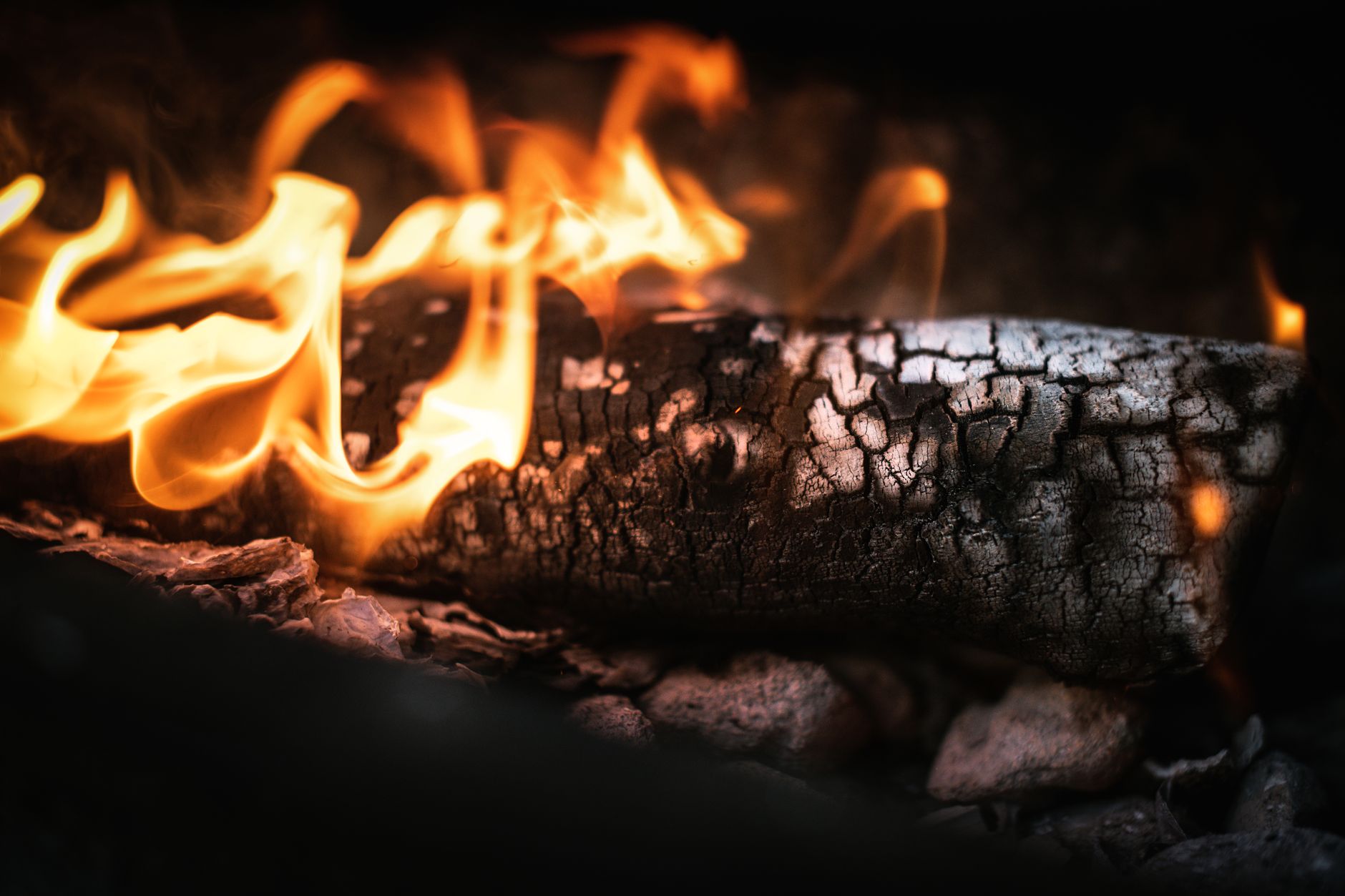
In its earliest form, creosote looks like a dusting of dark, powdery flakes clinging loosely to the flue wall, and a rotary brush clears it out with no fuss during a normal sweep visit. It shows up even under good conditions, properly dried wood, a hot enough fire, air moving the way it should, simply because burning wood always leaves some residue behind. Every chimney passes through this stage before it can reach any other, which is really the point: booking the sweep every year is nothing more than choosing to deal with creosote while it is still at its easiest and least expensive to remove.
Stage Two: The Cost Starts Climbing
Left alone, Stage One creosote hardens into something tougher and more tar-like, with a shiny, crunchy texture that resists a standard brush pass. It typically develops from fires that burn at lower temperatures, or from Stage One deposits sitting through repeated heat cycles without being removed. Clearing Stage Two takes more time, more aggressive brushing, and sometimes multiple passes, which means a longer appointment and a higher bill than the same chimney would have needed a year earlier at Stage One.
Stage Three: Where the Curve Bends Sharply
Glazed creosote is the one to worry about. By this stage it has hardened into a shiny, black, almost varnished coating that can run in streaks down the flue wall, and unlike the earlier stages it catches easily while shrugging off a standard brush entirely. Chimneys reach this point through some combination of a starved-for-air fire, wood that never fully dried, or a habit of letting fires smolder low instead of burning them hot and clean, repeated across enough burns to compound. Getting rid of it calls for tools built for the job, chemical softening agents applied across more than one visit when the buildup is heavy, and sometimes a controlled heat pass to loosen the glaze before it can be scraped away safely. This is the point on the curve where cost stops climbing gradually and starts climbing fast, and it is also the point most likely to ignite before a homeowner ever picks up the phone to book a sweep.
What a Chimney Fire Actually Costs
A chimney fire is what happens when the built-up creosote itself catches, and it burns hot enough inside that confined space to split flue tile and, on the worst end of the range, push heat into framing sitting just beyond the masonry. Even a fire that seems to burn itself out with no drama can leave that kind of hidden fracturing behind, which is why the aftermath calls for a full camera scan of the liner and, in the more serious cases, an actual repair or partial rebuild of whatever section took the damage. None of that comes anywhere near what the sweep would have cost. Put plainly, one missed year turns a routine, inexpensive habit into a structural repair bill, and it tends to happen with none of the obvious warning homeowners assume they would get first.
Why Coastal and Canyon Homes See It Differently
A flue that sits colder to begin with gives rising smoke less distance to travel before it starts condensing, and that is exactly the situation on many Santa Monica and Malibu chimneys, where marine air keeps the exterior masonry cooler than a comparable flue set further from the water. The practical effect is that creosote can reach a given stage a little sooner near the coast than it would inland, which is one more argument for treating the sweep as a fixed yearly habit rather than something to schedule around. Brentwood and Pacific Palisades properties near canyon terrain carry their own version of the same issue: airborne ash from nearby wildfire activity can drift into an open flue during fire season and settle on top of whatever creosote has already formed, adding to the total even for a fireplace that barely gets used.
What Actually Speeds the Curve Along
A handful of habits push a chimney up the cost curve faster than ordinary use ever would. Wood that has not had enough time to dry out is the worst offender, because the fire has to spend part of its own heat driving off that trapped moisture before it can burn cleanly, and the result is a cooler, smokier fire that leaves behind more residue per log than a properly seasoned one ever would. A damper left partway closed, or a flue with any kind of blockage, has a similar effect by starving the fire of the air it needs for full combustion. Resin-heavy softwoods add to the pile even when properly dried, burning cooler and smokier than a comparable hardwood. Cutting out these habits is often enough on its own to keep a chimney moving through the stages slowly rather than quickly.
The Case for a Paper Trail
Each visit our technicians make ends with a written record of what was found and what was done, and that paperwork is worth filing away rather than tossing once the appointment is over. Should a chimney fire happen anyway, despite a homeowner doing everything right, that stack of past sweep records becomes evidence that the loss was sudden rather than the product of a chimney left unattended for years, and California carriers draw exactly that distinction when they evaluate a claim. Pulling together a folder of old reports after the fact, once there is already damage to explain, is a far harder task than simply keeping each report as it arrives.
If a Fire Starts Inside the Flue
Get everyone out of the house and call 911 right away. Shutting the damper, if it can be reached safely, helps starve the flames of air, and shutting any glass doors on the firebox does the same. Do not throw water at a flue fire; the sudden steam it creates can crack the liner on its own. Once responders have cleared the scene, treat the fireplace as unusable until a technician has scoped the flue from top to bottom, since heat from even a short-lived fire can leave cracks and weak spots that a walk-through from the living room will never reveal.
Stay on the Cheap Side of the Curve
The entire cost curve resets to its cheapest point with one annual sweep. Skipping a year does not just delay the expense, it compounds it, moving creosote from a brush-away stage toward one that takes specialized tools and time to clear safely.
Schedule Your Sweep
Turner Bros Chimney Pros's CSIA-certified technicians provide sweeps and inspections throughout Brentwood, Pacific Palisades, Santa Monica, Malibu, Beverly Hills, and West Hollywood. Call (424) 266-4571 and keep your chimney at the cheap end of the curve.
Need Professional Chimney Service?
Our CSIA-certified technicians are ready to help with all your chimney and fireplace needs. Contact Turner Bros Chimney Pros today for expert service throughout the Westside / Malibu Coast service area.